Stinging insects
Bee and Wasp Removal in Salt Lake City
Late summer in the Salt Lake Valley is stinging insect season. Colonies that started as a single overwintered queen in April reach full size in August, food sources dry up, and yellowjackets become aggressive around patios, garbage cans, and anywhere food is outdoors.
The most important step happens before removal: correctly identifying what is nesting. Utah is a beekeeping state — the beehive is literally on the flag — and honey bees should be relocated by a beekeeper, not killed.
- Typical cost
- $125–$300 for accessible wasp nests; $300–$800+ for in-wall colonies requiring opening the structure
- Peak season
- July through early October
- Honey bees
- Should be relocated by a beekeeper; contact a local beekeeping association
Signs to look for
- —Steady insect traffic in and out of one point on a soffit, wall, or ground hole
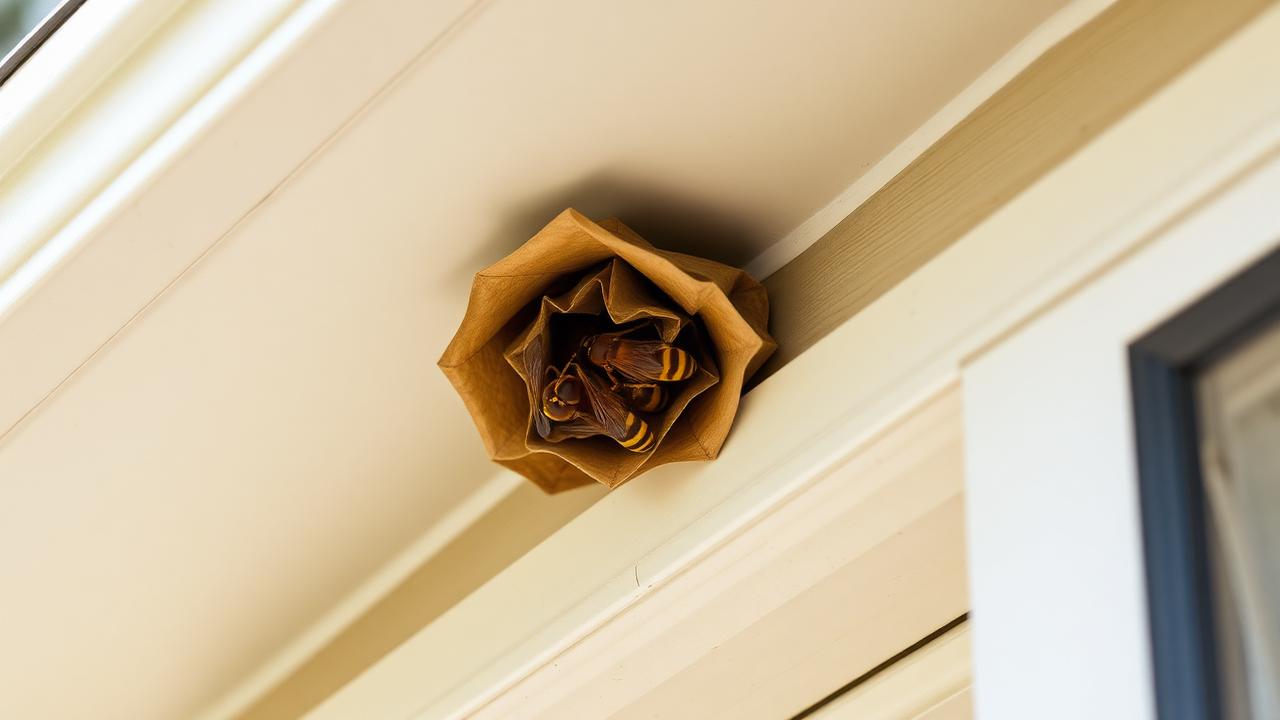
- —Umbrella-shaped open comb under an eave or patio cover (paper wasps)
- —A football-shaped enclosed paper nest in a tree or on a wall (bald-faced hornets)
- —Aggressive insects around a grill, garbage can, or soda can in late summer
- —Honey stains or a sweet smell on interior drywall
Identify before you spray
Paper wasps build open, umbrella-shaped combs on stems under eaves, in patio covers, and inside gas grills. They are relatively unaggressive away from the nest.
Yellowjackets nest in the ground, in wall voids, and in rock walls, and are the aggressive scavengers that show up at picnics in August. Bald-faced hornets build the large enclosed gray paper nests in trees and on walls and defend them vigorously.
Honey bees are fuzzy and amber-brown, work flowers rather than your lunch, and form a large colony that may occupy a wall void for years. Bumble bees are large, fuzzy, and nest in the ground in small colonies. Both are pollinators, and killing them should be a last resort.
Honey bees in a wall: what actually has to happen
A honey bee colony in a wall or soffit is not a spray job. Killing the bees leaves behind comb, brood, and often forty or more pounds of honey, which then ferments, seeps through drywall, and attracts ants, wax moths, and rodents for years.
Correct removal is a cut-out: opening the cavity, removing all comb, relocating the bees, cleaning the residue, and sealing the entry so a future swarm does not move into the same cavity. Some beekeepers and specialized removal companies in the valley do this work; a general pest company usually does not.
A swarm hanging in a tree is a different, easier situation — it is temporary and generally not defensive, and a local beekeeper will often collect it at little or no cost.
Wasp nest removal and timing
Removal is done at dawn or after dark when the colony is inside and inactive. Daytime treatment leaves foragers to return and rebuild, and it dramatically raises the chance of stings.
Ground yellowjacket nests are treated with dust at the entrance, which foragers carry inside. In-wall colonies are treated through the void and then the entry is sealed only after activity ends — sealing a live colony can drive it through drywall into the living space.
Do not use a ladder and a spray can on a nest above single-story height, and do not attempt any removal yourself if anyone in the household has a sting allergy. That is precisely the scenario professional removal is for.
Prevention through the year
In April and May, walk the property weekly and knock down starter nests the size of a quarter with a hose. A single queen removed in spring prevents a colony of thousands in August.
Keep garbage lids closed and cans rinsed, cover food and sweet drinks outdoors, and clean the grill after use. Fill abandoned rodent burrows in the lawn, since yellowjackets frequently colonize them.
Seal soffit gaps, screen attic and gable vents, and check gas meter boxes, playhouse roofs, and patio umbrellas each spring before the season builds.
Stings and when to seek care
Local swelling, redness, and pain are normal and resolve with ice and an antihistamine. Multiple stings, or any difficulty breathing, throat tightness, dizziness, or swelling away from the sting site, require emergency care immediately.
Unlike honey bees, wasps and yellowjackets can sting repeatedly, which is why an aggressive ground nest near a walkway or a child's play area should be treated as a genuine safety issue rather than a nuisance.
Common questions
Should honey bees in my wall be exterminated?
No, if it can be avoided. Killing them leaves comb and honey that will ferment and attract other pests. Contact a beekeeper or a removal specialist who performs cut-outs and relocation.
How much does wasp nest removal cost?
Accessible nests under eaves or in the ground typically run $125 to $300. Colonies inside a wall that require opening the structure run considerably more.
Why are wasps so aggressive in August?
Colonies are at maximum size, and their natural food supply declines late in the season, which pushes yellowjackets to scavenge human food and defend more aggressively.
Service details by area
Related guides
More reading
Disclaimer
Disclaimer: SLCPestControl.com is a free service to assist homeowners in connecting with local service providers. All contractors/providers are independent and SLCPestControl.com does not warrant or guarantee any work performed. It is the responsibility of the homeowner to verify that the hired contractor furnishes the necessary license and insurance required for the work being performed. All persons depicted in a photo or video are actors or models and not contractors listed on SLCPestControl.com.