Salt Lake City · General pest control
General pest control in Salt Lake City, Utah
A recurring exterior-focused program that keeps ants, spiders, crickets, silverfish, earwigs, and the other everyday invaders out of the house before they get in. If you're dealing with it in Salt Lake City, the details of where you live matter: The Avenues, Sugar House, Liberty Wells, Rose Park all have their own version of the problem. One call to our free referral line connects you with a licensed, independent provider who already services Salt Lake City.
Call (844) 578-1906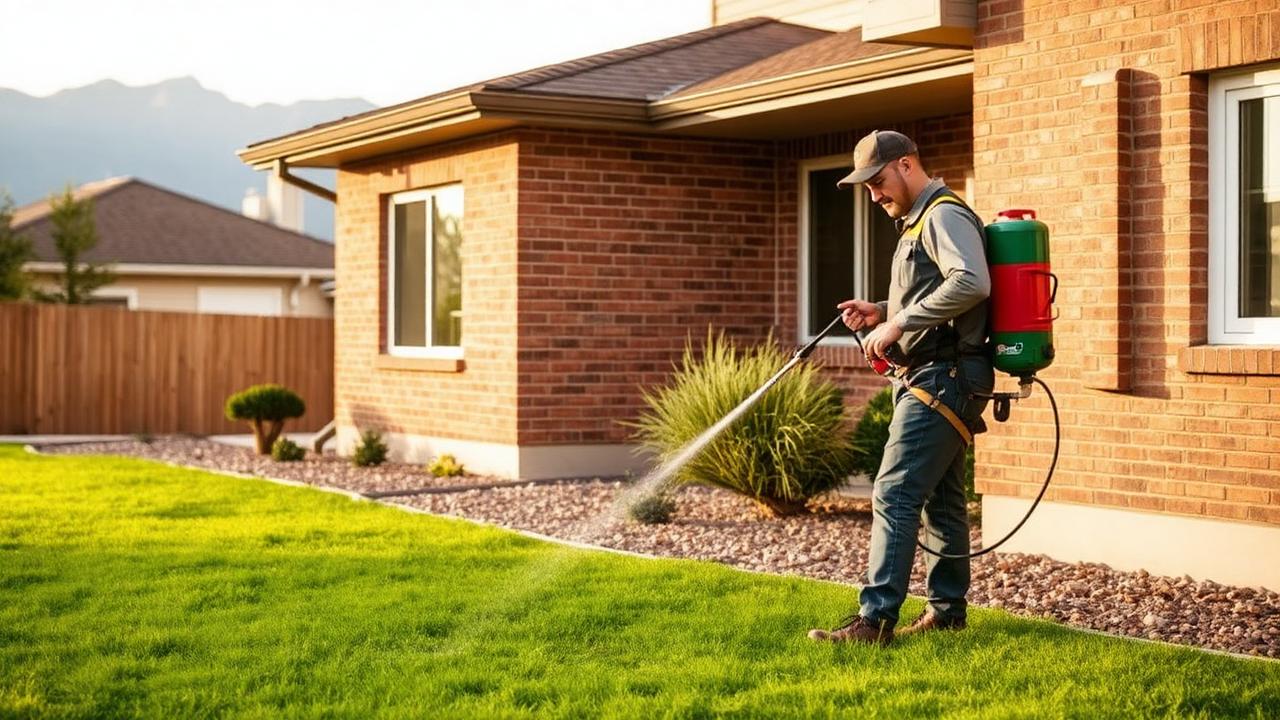
- Typical Salt Lake City cost
- $90–$140 per quarterly visit; $150–$275 for a one-time treatmentInitial visits usually cost more than the recurring ones because they include a full perimeter sweep, web knockdown, and interior work where it's needed.
- When it peaks here
- Year-round, with heavier service in April–May and again in September–October. Locally, ant trails start in late March on the west side and a couple of weeks later on the benches. Spiders wander indoors from late August. Mice show up reliably with the first hard frost in October.
Signs Salt Lake City homeowners notice first
- —Ant trails along baseboards or countertops
- —Spider webs returning within days of clearing them
- —Crickets or box elder bugs in the garage after a cold snap
- —Silverfish in bathrooms or storage boxes
- —Occasional sightings that turn into weekly sightings
Why Salt Lake City sees this
Salt Lake City has its own version of this problem. The city runs from the Jordan River on the west up to the Wasatch foothills on the east, and that four-mile climb changes the pest picture completely. Canyon mouths at City Creek, Emigration, and Parleys funnel insects and rodents down into the east-side neighborhoods, while the low west side sits closer to the river corridor and its year-round water. Brick bungalows and Victorians from the 1900s through the 1930s dominate the Avenues, Liberty Wells, and Sugar House, which means stone foundations, unfinished basements, crawlspaces, and the small gaps that come with a century of settling. Rose Park and Glendale are mostly postwar ranches, and downtown adds dense multifamily where shared walls matter. A technician who works Salt Lake City regularly will factor both into how they approach general pest control on your property rather than running the same route they'd run anywhere else in the valley.
Salt Lake City homes and how they're built
Brick bungalows and Victorians from the 1900s through the 1930s dominate the Avenues, Liberty Wells, and Sugar House, which means stone foundations, unfinished basements, crawlspaces, and the small gaps that come with a century of settling. Rose Park and Glendale are mostly postwar ranches, and downtown adds dense multifamily where shared walls matter. The city runs from the Jordan River on the west up to the Wasatch foothills on the east, and that four-mile climb changes the pest picture completely. Canyon mouths at City Creek, Emigration, and Parleys funnel insects and rodents down into the east-side neighborhoods, while the low west side sits closer to the river corridor and its year-round water.
What a general pest program actually covers
Most Utah companies build their general program around a treated barrier at the foundation, plus targeted work at the places bugs actually use to get inside: weep holes, utility penetrations, window wells, door sweeps, soffits, and the underside of eaves. A typical visit includes a granular application in the rock or bark beds, a liquid residual band along the foundation, de-webbing under eaves and around light fixtures, and knocking down wasp starts before they mature. Interior treatment is usually done only on request or when there's active pressure — modern programs deliberately keep product outside where the pests are, rather than spraying baseboards inside a home where kids and pets live.
Why quarterly beats one-and-done in Utah
The products used on an exterior barrier break down in UV light. Along the Wasatch Front, with high-elevation sun and long dry summers, most residual materials give roughly 60 to 90 days of real performance. That's the entire reason the industry settled on a quarterly rhythm — it isn't a sales gimmick, it's the actual half-life of the treatment. Quarterly service also lines up with Utah's two big pressure spikes: ants and wasps waking up in spring, and crickets, spiders, and rodents pushing indoors in fall. A one-time treatment is the right call for a specific active problem. A recurring program is the right call if you're tired of dealing with the same thing every September.
What to ask before you sign anything
Ask whether callbacks between scheduled visits are free — reputable companies include them. Ask about the contract term and the early-cancellation fee, which is where most complaints come from. Ask which products they use and whether there's a re-entry interval for pets. Ask if the technician who shows up is licensed by the Utah Department of Agriculture and Food, or working under someone else's license. And get the price for the initial visit and the recurring visit in writing separately, because a quoted "$99" often refers to only one of the two.
What you can do between visits
Pull mulch and rock back a few inches from the foundation so there's a dry break. Trim shrubs and tree limbs so nothing touches the siding — branches are bridges. Fix door sweeps; a gap you can see daylight through is a highway for crickets and mice. Move firewood off the house. Keep window wells clear of leaf litter. None of this replaces treatment, but it dramatically reduces how much treatment has to do, and any honest technician will tell you the same thing on the first visit.
Common questions
Is the treatment safe around kids and pets?
Modern exterior products are applied at very low concentrations and are dry — and effectively inert — within a couple of hours. Ask your technician for the specific re-entry interval on the label of what they're using, and keep pets off treated turf until it dries.
How long before I stop seeing bugs?
You'll often see more activity for two or three days after the first treatment as insects move out of harborage. Meaningful reduction usually shows up inside a week, with full effect in two.
Do I need to be home for service?
For exterior-only visits, usually not — you just need gate access to the back yard. Interior work obviously requires someone home.
Other services in Salt Lake City
General pest control nearby
More reading
Comparing companies first? Browse the Salt Lake pest control directory.
Disclaimer
Disclaimer: SLCPestControl.com is a free service to assist homeowners in connecting with local service providers. All contractors/providers are independent and SLCPestControl.com does not warrant or guarantee any work performed. It is the responsibility of the homeowner to verify that the hired contractor furnishes the necessary license and insurance required for the work being performed. All persons depicted in a photo or video are actors or models and not contractors listed on SLCPestControl.com.